
Aged Care for Families: How to Know When Your Loved One Needs Support

Updated: Sep 30
Knowing when an older loved one may need extra support can be difficult. From changes in daily activities and mobility to health and social wellbeing, recognising these signs early can help families explore the right aged care options. This guide explains what aged care can involve, what to consider when choosing support, and how aged care services at home can help older people remain independent and comfortable.

When Might Your Loved One Need Aged Care?
As people get older, everyday tasks can sometimes become more difficult. Extra aged care support at home can help an older person stay independent and continue living comfortably in familiar surroundings.
In Australia, 39.8% of people aged 65 and over (1.7 million people) needed assistance with at least one personal or everyday activity in 2022. This increased to 77.2% among people aged 85 and over.
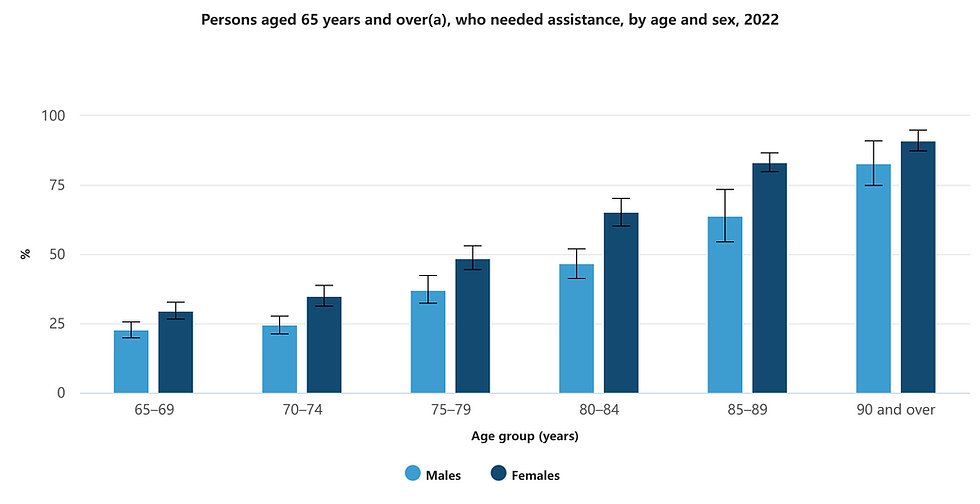
Source: Australian Bureau of Statistics (ABS), Disability, Ageing and Carers, Australia: Summary of Findings, 2022.
Some common signs that your loved one may benefit from additional support include:
Personal Care and Daily Activities: Difficulty with cooking, cleaning, shopping, dressing, or bathing.
Mobility and safety: Trouble walking, using stairs, or moving safely around the home.
Health and wellbeing: Finding it harder to manage medications, appointments, or daily health needs.
Social connection: Spending less time with family, friends, or community activities.
Understanding Aged Care
Aged care is not only about moving into an aged care home. It can also provide support at home, helping older people maintain their independence and continue living comfortably in familiar surroundings.
Depending on their needs, aged care may include help with:
personal care,
household tasks
meal preparation
transports assistance
social activities
nursing care
The Australian Government’s Support at Home program is designed to help eligible older people access these services while living at home.
Choosing the Right Aged Care Support
Choosing aged care support is about finding services that suit your loved one’s needs, preferences and level of independence. For many families, this can feel like a big decision.
When choosing an aged care provider, here are some key factors to consider:
Care needs: Does the provider offer the services your loved one truly needs?
Preferences: Can they accommodate preferred schedules, cultural needs, and personal choices?
Quality and reliability: Look for a provider with trained staff and a strong commitment to quality care.
Cost: Understand what services cost and what contributions may apply to your circumstances.
Under the Support at Home program, services are based on assessed needs, goals, and preferences. You can compare providers and choose one that best suits your situation.
Taking the time to compare your options can help you find support that makes everyday life easier while helping your loved one remain independent at home. Most importantly, the right provider should make your loved one feel comfortable, respected and involved in decisions about their own care.
Getting Started with Aged Care Services

Step 1 — Talk to Your Loved One
Start with an open conversation about how they are managing at home. Ask about the activities they find difficult, what support they would feel comfortable receiving, and what is most important to them. Including them in the decision-making process helps ensure their preferences and independence remain central to their care.
For some families, this conversation may feel uncomfortable at first. Your loved one may worry that accepting support means giving up some of their independence, or wonder whether they have become a burden on the family.
At this stage, your understanding and reassurance can make a big difference. Let your loved one know that home care is there to support them - to help them live more safely, comfortably and happily, while making life easier and more enjoyable for the whole family.
Step 2 — Identify Their Care Needs
Consider the areas where they may need additional support, such as personal care, mobility, household tasks, meal preparation, health management, or social activities. Think about both their current needs and whether those needs may change over time.
Step 3 — Explore Aged Care Options
Once you have a clearer understanding of their needs, explore the different aged care services available. Support may be provided at home or through residential aged care, depending on the level of care required and the person’s preferences.
For someone who wants to continue living at home, the right combination of services can provide extra support without unnecessarily changing the routines and surroundings they are familiar with.
Step 4 — Seek Professional Advice or Assessment
Professional advice and an aged care assessment can help determine what type and level of support may be appropriate. My Aged Care can provide information about eligibility, assessments, funding and available services.
You do not need to have every answer before seeking advice. An assessment can help you and your loved one better understand what support may be available and what the next steps could look like.
Step 5 — Arrange the Right Support
After understanding the available options, choose services and a provider that suit your loved one’s needs, preferences, and circumstances. The right support should make everyday life easier while helping them remain as independent, safe, and comfortable as possible.
How AB Health Can Support Older People
At AB Health, we understand that staying independent does not mean managing everything alone. Our services combine flexible aged care support at home with reliable healthcare support, helping older people manage everyday activities and access medical care while remaining in the comfort of their own home.
Whether someone needs occasional help around the house or more regular support with their daily routine, our focus is on providing care that works around the individual — their needs, preferences and way of life.
Support at Home
Our aged care support at home is designed around each person’s individual needs and preferences. Depending on their circumstances, support may include assistance with:
Personal care,
Grooming and dressing,
Household cleaning,
Meal preparation,
Shopping,
Everyday household tasks…
Having the right support with these activities can make daily life easier while helping older people maintain their independence and continue living safely and comfortably at home.
Telehealth Consultations
Getting to medical appointments can sometimes be difficult for older people, particularly when mobility, transport or distance is a concern. Through telehealth consultations, clients can connect with registered healthcare professionals online from the comfort of their home.
Telehealth can provide a convenient way to discuss health concerns, receive medical advice and, where clinically appropriate, support ongoing care. It can also reduce the need for unnecessary travel while making healthcare more accessible.
Personalised Aged Care Support
Everyone’s care needs are different. That is why we take a personalised approach to aged care, helping clients access the type of support that is appropriate for their individual circumstances.
Where appropriate, clients can combine virtual healthcare consultations with in-home support, creating a more convenient and connected approach to managing both health and everyday needs. A client may be able to speak with a healthcare professional through telehealth while also receiving practical assistance from a visiting carer at home.
By bringing these services together, we aim to make it easier for older people to access the support they need without having to leave the familiar environment of home. Our goal is to support independence, comfort and wellbeing while providing care that fits into each person’s everyday life.
Find the Right Support for Your Loved One
If you’re concerned about an older family member and aren’t sure what type of support they may need, you don’t have to make the decision alone. AB Health can help you explore your aged care options and find support that fits your loved one’s needs, preferences and everyday life.
Get in touch with AB Health today to learn more about our aged care and support at home services.

Comments